FAQ - Frequently Asked Questions
TRANSPARENT INFORMATION FOR INFORMED DECISIONS
On this page, we address the most frequently asked questions and provide clear, concise answers so that you can better understand our services, processes, and offers.
STRATEGY & PORTFOLIO
1. What strategic role can investment gemstones play in a long-term wealth architecture?
Investment-grade gemstones are positioned as a tangible asset component within a structural asset allocation.
They complement existing gold or precious metal holdings and serve as a non-correlated real asset allocation.
Their strategic purpose lies in maintaining real purchasing power over long periods, combined with asymmetric value potential due to natural scarcity and increasing global wealth concentration.
In a long-term asset architecture, they do not represent a trading position, but rather a structural asset component with a 10+ year time horizon.
2. Why can colored gemstones be considered an intelligent strategic advantage over purely financial market-based portfolios?
Financial market-based portfolios are system-dependent:
they react to interest rate policies, liquidity cycles, and regulatory changes.
High-quality, untreated investment-grade colored gemstones, on the other hand:
‣ possess extremely high value density
‣ are not subject to any ongoing system dependencies
‣ do not generate counterparty risks
‣ are not digitized or derivatized
‣ are not subject to any issuer structure
This structural independence creates a unique substance component that does not have to reflect classic capital market cycles.
3. What should a strategic allocation within a diversified portfolio look like?
For long-term oriented asset owners, a structured asset allocation of up to approximately 10-15% of total assets can be beneficial.
Within this quota, investment gems are understood as a static permanent allocation - not as a position that can be tactically increased or decreased.
The goal is not short-term liquidity, but long-term asset protection with selective value enhancement potential.
4. How do investment gemstones differ from classic commodities or precious metals?
Unlike standardized raw materials, investment gemstones are:
‣ not homogeneous
‣ not traded on the stock exchange
‣ not arbitrarily reproducible
‣ Highly selective quality
Their market is not indexed, but quality-driven.
It is precisely this selectivity - coupled with documented origin and international certification - that creates a natural barrier to entry and protects against mass-market-driven volatility.
5. What structural factors favor this asset class in the long term?
The strategic investment thesis is based on several structural drivers:
1. Natural supply constraints:
High-quality deposits are geologically limited and largely exhausted in many regions.
2. Increasing global wealth concentration:
As the number of wealthy households grows, so does the demand for mobile, value-dense tangible assets.
3. High value density with low system dependency:
Colored gemstones combine substantial value in a minimal space – without infrastructural dependency.
These factors have a structural – not cyclical – effect.
6. How are the typical risks of this asset class managed?
The relevant risks are:
‣ Illiquidity
‣ Selection and quality risk
‣ Market opacity
These risks are not ignored, but addressed structurally:
‣ through strictly defined quality criteria
‣ through international certifications (e.g. DSEF, SSEF, Gübelin)
‣ through documented origin
‣ through clearly defined investment parameters
‣ through market expertise and many years of selection experience
Especially in the area of quality-driven tangible assets, it is not the asset class alone that decides – but rather the expertise in selection and structure.
7. What role does your market and quality expertise play in this context?
The market for colored gemstones is not a standardized capital market.
It is selective, opaque, and highly differentiated in terms of quality.
Institutional quality assurance is therefore not an add-on, but a prerequisite.
Our expertise lies in:
‣ systematic quality selection
‣ International laboratory certification
‣ Origin verification
‣ Market observation
‣ structured purchase criteria
It is not the mere existence of a gemstone that creates value - but rather the precise selection within a globally fragmented market.
ACQUISITION & SETTLEMENT
1. What exactly does the acquisition process entail?
The acquisition takes place in close coordination between client and consultant.
First, the target parameters are defined – in particular, the budget and the desired types of gemstones. The agreed target budget is contractually stipulated. It is agreed that a deviation of up to ±10% is possible. Should this limit be exceeded, a separate consultation with the client will take place.
The selection of suitable stones takes place worldwide and can take two to three weeks, depending on availability and quality requirements.
After successful procurement, the stones undergo the following structured testing steps:
‣ Examination and certification by an internationally recognized gemological laboratory (e.g., Gübelin, Swiss Foundation for Gemstone Research, German Foundation for Gemstone Research)
‣ Valuation by a publicly appointed and sworn expert from the Chamber of Industry and Commerce (IHK) to determine the retail replacement value
‣ Subsequent packaging into the GemUnit with unique serial number assignment
The client receives transparent status information throughout the entire process.
2. When will the purchase price be legally binding?
Upon signing the contract, the target budget is agreed upon and is initially due in full.
The final price will only be fixed after completion of the laboratory testing and the evaluation by the publicly appointed and sworn IHK expert.
If the price falls within the agreed ±10% range, either the following will occur:
‣ a subsequent payment (up to a maximum of 10%) or
‣ a refund if the final purchase price is below the target budget.
3. What documents will the client receive?
Upon delivery or storage, the client receives:
‣ the original laboratory certificate in physical form
‣ the physical IHK valuation report
‣ the sealed GemUnit with serial number assignment
‣ an invoice with VAT shown separately
‣ digital documentation (photos and video of the specific GemUnit)
4. When does ownership and risk transfer?
Legal ownership transfers to the client upon full payment of the final invoice.
The stones are insured throughout the entire acquisition and testing process.
The transfer of risk takes place:
‣ in case of personal handover with signature of the client
‣ when picked up at the German Gemstone House
‣ or with confirmation of receipt in the customs warehouse
In the case of storage in a bonded warehouse, the risk of safekeeping is transferred to the respective warehouse.
5. Is there an optional escrow solution?
At the express request of the client, the acquisition can be handled by an independent auditing firm acting as trustee.
In this case:
‣ The anticipated purchase price will be transferred to the account of the auditing firm.
‣ 35% will be released to the German Gemstone House after the start of the process.
‣ The remaining 65% will only be released after successful handover or confirmed storage.
The auditing firm monitors the proper execution of the process, but does not make any investment decisions.
Escrow services are optional and subject to a fee. The fees are calculated as a percentage of the escrow amount.
There is no separate contractual agreement between the client and the auditing firm; the transaction is processed on the basis of the agreement between Deutsches Edelsteinhaus and the auditing firm.
QUALITY & SELECTION
1. How is the investment universe defined?
The investment universe is deliberately narrowly defined.
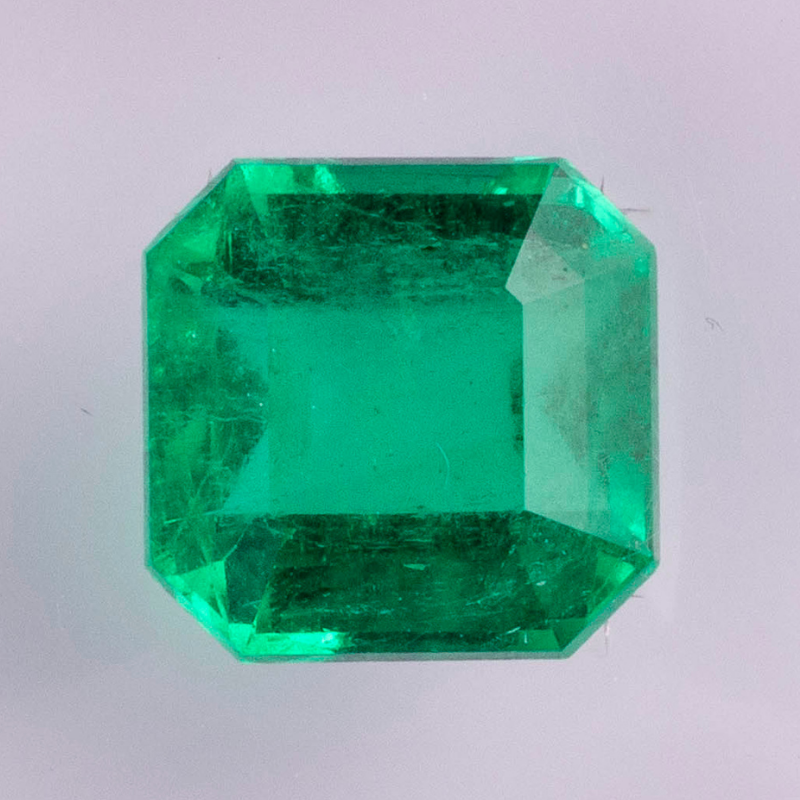
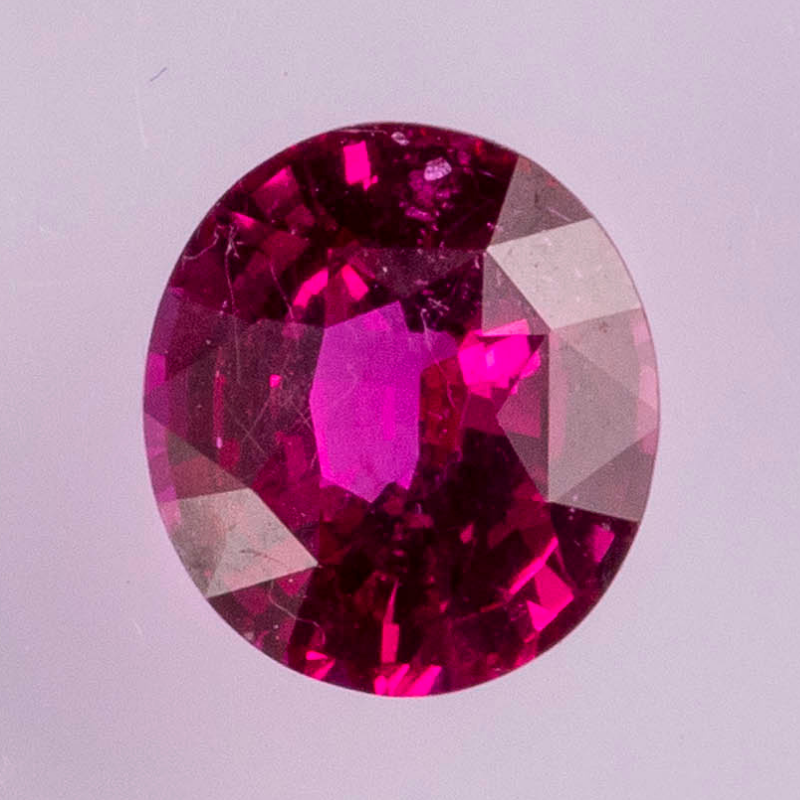
It includes exclusively untreated colored gemstones of the highest quality. The focus is primarily on rubies, sapphires, and emeralds, as well as selected other rarities with a clear market structure.
Only about 2–3% of the globally available supply meets the defined quality requirements. This natural selection barrier is an integral part of the investment logic.
2. What criteria are used for quality assessment?
The quality assessment is based on the internationally recognized 4 C's:
1. Color
2. Clarity
3. Cut
4. Carat (Weight)
Only stones that are in the highest quality segment in all four categories are selected.
Origin is not a primary selection criterion – objectively measurable quality is decisive.
3. What role do treatment and manipulation play?
Treatments that affect value are generally avoided.
This includes in particular:
‣ Heat treatments
‣ Diffusion process
‣ Glass fillings
‣ other substance-altering manipulations
In rare cases, standard market treatments – such as light oiling of emeralds – are internationally accepted. These are transparently documented and taken into account in the independent appraisal.
All information is based exclusively on internationally recognized laboratory certificates (e.g. DSEF – German Foundation for Gemstone Research , Gübelin Gem Lab or SSEF – Swiss Foundation for Gemstone Research ).
4. How is the price determination structured?
The rating is not carried out by our company.
Based on the laboratory reports, each gemstone is appraised by a neutral, court-certified expert from the Chamber of Industry and Commerce (IHK). The appraisal is based on the retail replacement price .
This replacement value corresponds to the purchase price paid by the customer.
The price is therefore set independently of the seller.
This separation between selection and price evaluation reduces potential conflicts of interest and creates transparency.
5. How exactly does the selection process work?
The selection process is expert-based and multi-stage:
1. Pre-selection by our experts
2. Strict internal quality control
3. Collaboration with established, quality-assured supplier networks
4. International laboratory certification
5. External evaluation by sworn Chamber of Industry and Commerce (IHK) appraisers
The German Gemstone House bears 100% of the purchasing risk. This prevents opportunistic market commodities.
This curated structure distinguishes institutional quality selection from traditional gemstone trading.
6. What role does your company play in the market?
Our company sees itself not merely as a trader, but as a quality-based market institution with a curated investment universe.
In a globally fragmented and opaque market environment, value is not created solely by the asset itself, but by:
‣ precise selection
‣ objective quality control
‣ Independent review
‣ documented certification
‣ disciplined market observation
The barrier to entry lies not in access to gemstones, but in the ability to consistently select within the top 2-3% of the global supply.
VALUE PRESERVATION & VALUE DEVELOPMENT
1. How is long-term performance measured?
The value development is not based on internal selling prices, but on independent replacement cost valuations.
Since 2011, historical tables have been maintained that depict the development of defined quality ranges (mid-good to mid-fine). This data originates from external retail replenishment tables and independent expert reports.
The displayed ranges reflect market trends. Each stone is individually assessed.
2. Why is the development of replacement value crucial?
Unlike publicly traded assets, there is no daily price.
The relevant reference value is the objective replacement value – that is, the price at which a comparable quality stone would have to be purchased again in retail.
This value is determined by court-certified experts from the Chamber of Industry and Commerce (IHK).
The appraised value and the selling price are identical.
Discounts or rebates are not provided.
3. How does the volatility compare to traditional financial investments?
The market for high-quality colored gemstones is quality-driven, not index-based.
As the quality level increases, the intensity of fluctuations decreases. In the highest quality segment, hardly any noticeable volatility can be observed.
Compared to listed funds or precious metals, the volatility is structurally much lower.
This is due, among other things, to the following factors:
‣ Limited offer
‣ discreet market
‣ missing derivatization
‣ no short-term speculative structure
‣ not listed on the stock exchange
4. Is there a correlation with stock markets or gold?
Historically, there has been no significant correlation with stock markets.
There is no systematic parallel movement with gold either.
Pricing is driven by quality and demand – not by macro-cyclical factors.
This makes colored gemstones an independent substance component within a structural allocation.
5. How can value development be distinguished from liquidity?
Value development is based on objective replacement cost valuation.
Feasibility is achieved through a structured exit process within a discrete, quality-driven market.
This is not a daily liquid market, but a long-term asset position with a 10+ year horizon.
This market structure in particular contributes to stability.
6. How are historical developments to be interpreted?
The historical bandwidths since 2011 show a structural upward trend over time.
They do not represent a forecast, but rather document the development of defined quality segments.
Individual stones fall within these ranges – depending on quality, weight and market dynamics.
LIQUIDITY & EXIT STRATEGY
1. How should the liquidity of investment gemstones be classified?
Investment-grade gemstones are not a liquid asset class in the short term.
They are designed as long-term value investments with a time horizon of at least ten years. Short-term speculative gains are not the primary focus.
Those who wish to exploit temporary market movements will find more suitable instruments on the capital market.
This asset class is aimed at long-term oriented asset holders.
2. How is the exit structured?
The exit is organized on a market-based basis.
Depending on the mandate, it will be carried out:
‣ mediating through our house
‣ coordinating within existing cooperation structures
‣ via international dealer networks
Institutional investors and private banks sometimes have their own direct access and can structure transactions themselves.
There is no contractual buyback guarantee. The sale takes place within a discreet, quality-driven market.
3. How long does a structured sale take?
Experience shows that the sales process typically takes 3–6 months when handled through our agency. The actual duration depends on the price segment and market conditions.
This asset class is deliberately not intended for short-term liquidity needs.
Structurally, it behaves more like a high-quality real estate component in the portfolio:
it is not sold for tactical reasons, but as part of long-term asset planning.
4. How is the buying and selling margin (spread) to be understood ?
As is common with physical assets, there is also a difference between the buying and selling price (spread) for investment-grade colored gemstones .
This spread is:
‣ standard market practice
‣ depending on quality and individual structure
‣ influenced by holding period and market environment
‣ not definable in general terms
It is not possible to publish fixed ranges in general, as the specific range always depends on the individual stone, its quality, and the specific transaction conditions.
Compared to established physical commodity markets, the structure of the bid and ask spread is similar to that of physical silver, although individual consideration remains crucial.
The assessment of the retail replacement value is carried out by a publicly appointed and sworn expert from the Chamber of Industry and Commerce.
5. What role does intergenerational wealth planning play?
In many asset structures, investment gemstones are not primarily intended as a means of sale.
They are often kept across generations.
Their high value density, discretion and substance quality make them a building block of long-term wealth architecture.
Exiting is possible – but not necessarily part of the strategic logic.
STRUCTURE & SAFETY
1. How is the ownership structure regulated?
Investment gemstones are acquired as the direct, full property of the client. This does not involve collective custody, pooling solutions, or indirect investment models.
Each stone is unique:
‣ physically individualized
‣ Assigned to series and certificates
‣ clearly documented in the contract
The ownership situation is clearly defined. The customer possesses the investment gemstone directly.
2. What delivery and storage options are available?
Three structured options are available:
1.) Storage in a high-security warehouse in Switzerland
2.) Personal collection at our office in Amtzell
3.) Insured valuables transport directly to the customer
The decision regarding safekeeping rests entirely with the owner.
3. How is the insurance arranged?
Full insurance coverage applies during storage in the high-security warehouse.
The transport is fully insured.
Even with direct delivery, insurance is included until handover.
Once the customer has taken possession of the insurance, the follow-up insurance becomes their responsibility.
4. How is discretion guaranteed?
The transaction is handled discreetly and without third-party platforms.
‣ No central reporting office
‣ No external trading platform
‣ Contract documentation exclusively between our company and the customer
‣ Data collection only to the extent necessary for proper processing
‣ Cash transactions are not accepted.
5. What role does system independence play?
System independence is very high because gemstones are not directly tied to the financial market. Investment gemstones are physical assets.
They wear:
‣ no counterparty risk
‣ no issuer risk
‣ no dependence on financial institutions
‣ no digital structure
‣ no derivatization
The substance exists independently of capital market infrastructure.
At the same time, it remains mobile.
6. How is security to be understood structurally?
Security is not created through promises, but through structure:
‣ full physical ownership
‣ Independent certification
‣ external review
‣ discreet safekeeping
‣ International storage options
‣ Clear ownership documentation
The investment gemstone is not a claim to substance – it is substance.
TAXES & REGULATORY
1. How is the acquisition classified legally?
The acquisition is a classic purchase agreement for a movable item.
It will:
‣ no holdings
‣ no fund units
‣ no securities
‣ no collective investment structures
acquired.
The customer acquires full physical ownership of an individually assigned asset.
Ownership is transferred upon final payment.
2. Is it a regulated financial product?
No.
Investment gemstones are physical assets.
They are neither a financial instrument nor a regulated capital market product.
It consists of:
‣ no issuer structure
‣ not a collective investment vehicle
‣ no prospectus requirement
‣ k capital market regulation within the meaning of the Federal Financial Supervisory Authority (BaFin), the Financial Market Authority (FMA) or the Swiss Financial Market Supervisory Authority (FINMA)
The transaction is a purchase of goods.
3. How is the transaction documented?
The contractual relationship exists exclusively between our company and the customer and is based on the general terms and conditions .
The purchase is made on the basis of a proper invoice with VAT shown separately.
4. What tax aspects need to be considered?
Investment-grade colored gemstones can – depending on asset structure, holding period and tax residency – bring with them tax peculiarities or advantages.
Since tax regulations vary from country to country and must always be assessed individually, a binding classification is made exclusively by the respective tax advisor of the purchaser.
We do not provide tax advice and are not permitted to give individual tax planning recommendations .
5. How is the compliance structure designed?
The transaction is handled discreetly and without third-party platforms.
‣ No cash transactions
‣ Documented payment methods
‣ Contract documentation solely between the parties
Data collection is limited to the information necessary for proper processing.
GENERATIONAL STRATEGY & WEALTH TRANSFER
1. What role can investment gemstones play in a multi-generational wealth architecture?
Investment gemstones are primarily designed as a long-term asset.
They are not designed for short-term reallocation, but can be held as a long-term store of wealth across generations.
Especially in the context of structural asset architecture, they often serve not for sale, but for the preservation of substance.
2. What structural characteristics facilitate the transfer of assets?
Investment gems are:
‣ movable private assets
‣ physically individualized
‣ clearly certified and documented
‣ highly mobile
These features allow for flexible integration into individual estate or asset structures.
The specific details – whether direct transfer, integration into existing asset vehicles or international structure – can be determined in consultation with the client's respective legal and tax advisors.
3. What role does discretion play in the transfer of assets?
Colored gemstones combine high value density with physical substance.
They are:
‣ not publicly registered
‣ not digitally structured
‣ not centrally recorded
‣ Individually assignable
Depending on the structure, these features allow for discreet and flexible wealth transfer within the family.
4. What is the significance of international mobility?
Investment gemstones are physical assets with international storage and safekeeping options.
You can:
‣ stored in high-security warehouses
‣ personally undertaken
‣ or be transported/shipped internationally
This mobility creates structural flexibility in globally oriented asset architectures.
5. Why are gemstones not comparable to traditional financial products?
In contrast to capital market instruments, there are:
‣ no issuer dependency
‣ no digital custody obligation
‣ no portfolio structure
‣ no system dependency
The asset is physically present and individually allocated.
Especially in intergenerational contexts, it is not a claim that is transferred - but substance.


LONG-TERM PERSPECTIVE
Gemstones are not a short-term investment. Their value develops over years, often decades. An investment horizon of five to ten years is recommended. This way, returns are not generated through fluctuations, but value through stability.
SELECTION OF STONES
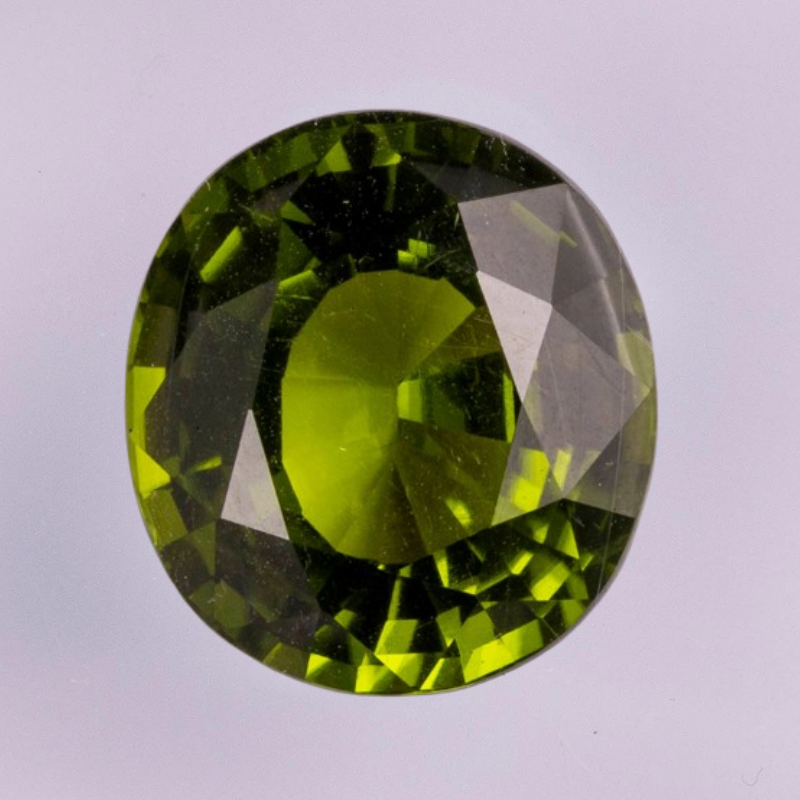
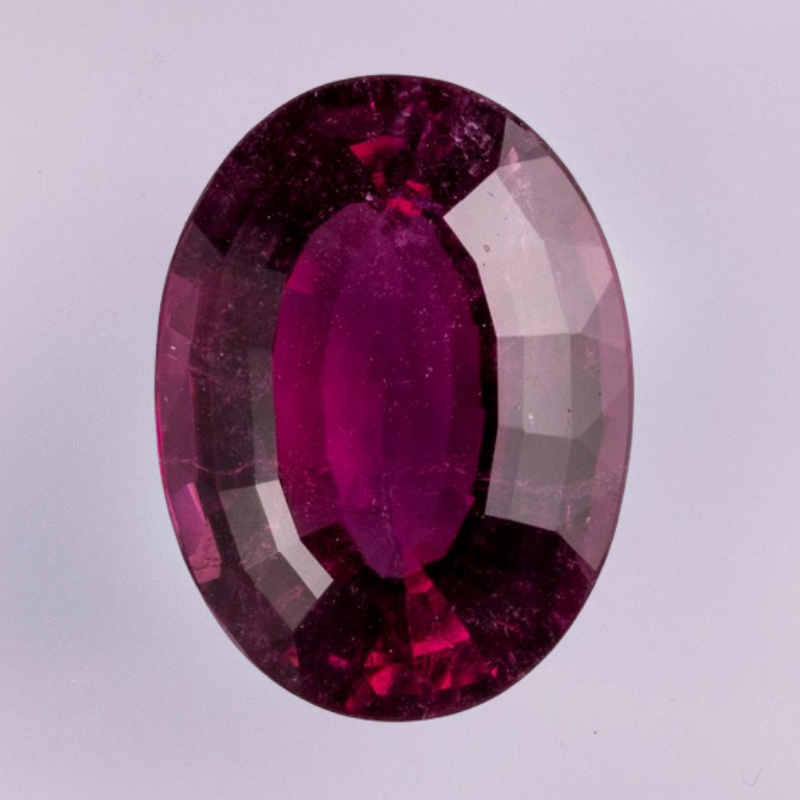
For beginners, aquamarines, tourmalines, spinels, peridots, and tanzanites are recommended – solid investments with consistent demand.
For larger volumes, the “Big Three” are suitable: ruby, sapphire, and emerald.
The Paraiba tourmaline is considered a rarity of the highest quality and a specialty of experienced investors.