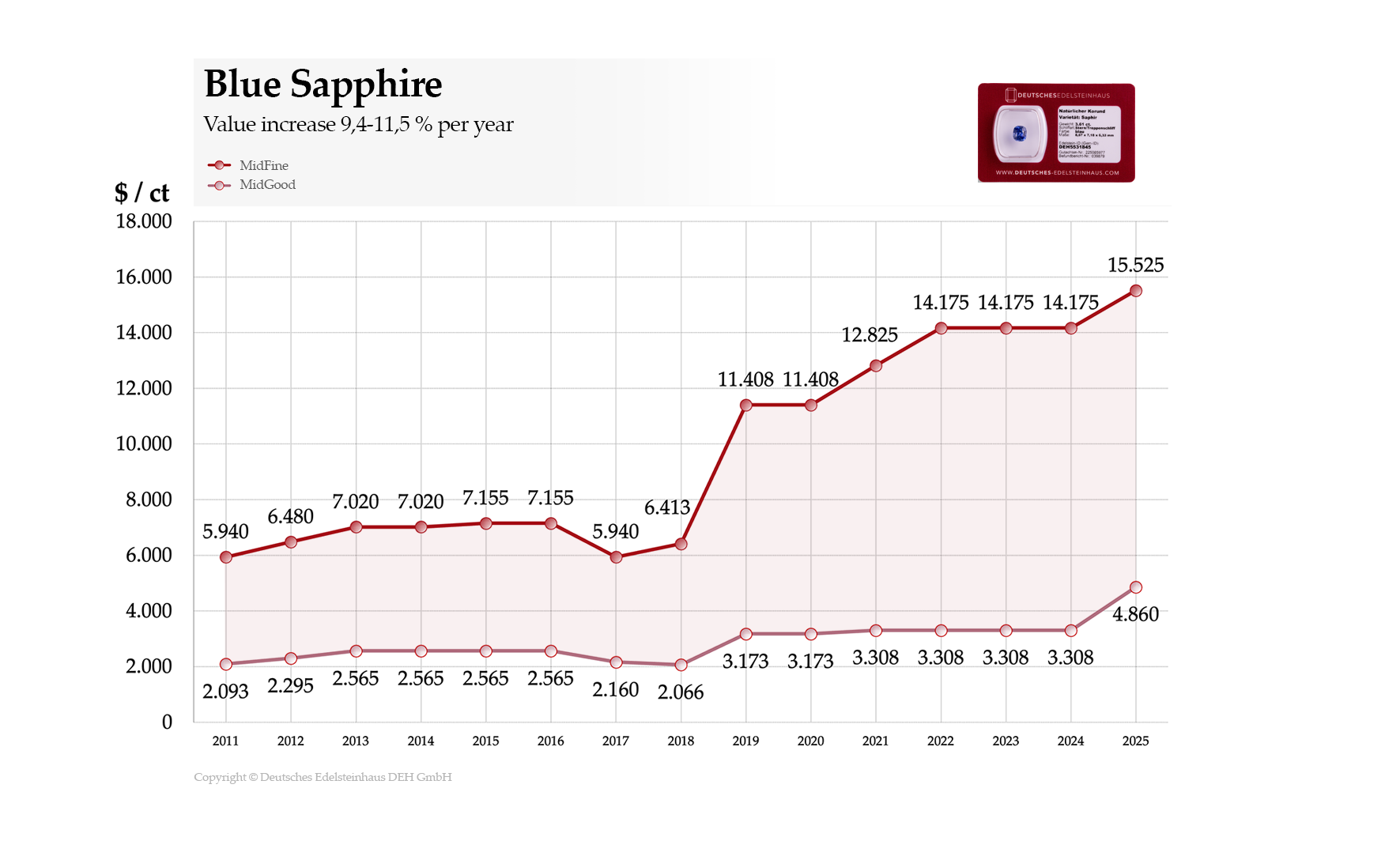
Blue Sapphire
Essential core:
Quality criteria: A vibrant, saturated blue with even color distribution is crucial. “Royal Blue” grades, with deep and clean color saturation, and rare “Kashmir” types, known for a velvety cornflower blue, are particularly sought after. High transparency and precise cutting proportions are essential. Natural inclusions are acceptable as long as they do not diminish the overall color appearance. Rarity increases significantly as carat weight rises.
Market position: The global supply of high-quality blue sapphires is structurally limited. Continued strong international demand contributes to low circulating supply, especially in the upper quality segment. New discoveries are rare and typically limited in volume.
Geological characteristics: Blue sapphires form under specific metamorphic conditions in aluminum-rich host rock. The combination of iron and titanium in the crystal lattice produces the characteristic blue color. The simultaneous presence of both elements is geologically uncommon and helps explain the limited availability of intensely colored, top-quality stones.
Historically important origins include Sri Lanka, Madagascar, and parts of Southeast Asia. With a Mohs hardness of 9, sapphire is among the most durable gemstones and is often regarded as a stable, long-term holding within high-value tangible assets.

Characteristic rutile needles (“silk”) as a marker of origin

Investment quality:
very high, fine blue and clear transparency

Market position:
Long-term stable demand