Red Tourmaline
Essential core:
Quality criteria: Key factors include an intense, even red color and high transparency. Larger carat weights are significantly rarer. Cutting must account for pronounced pleochroism to achieve a harmonious and stable overall color appearance.
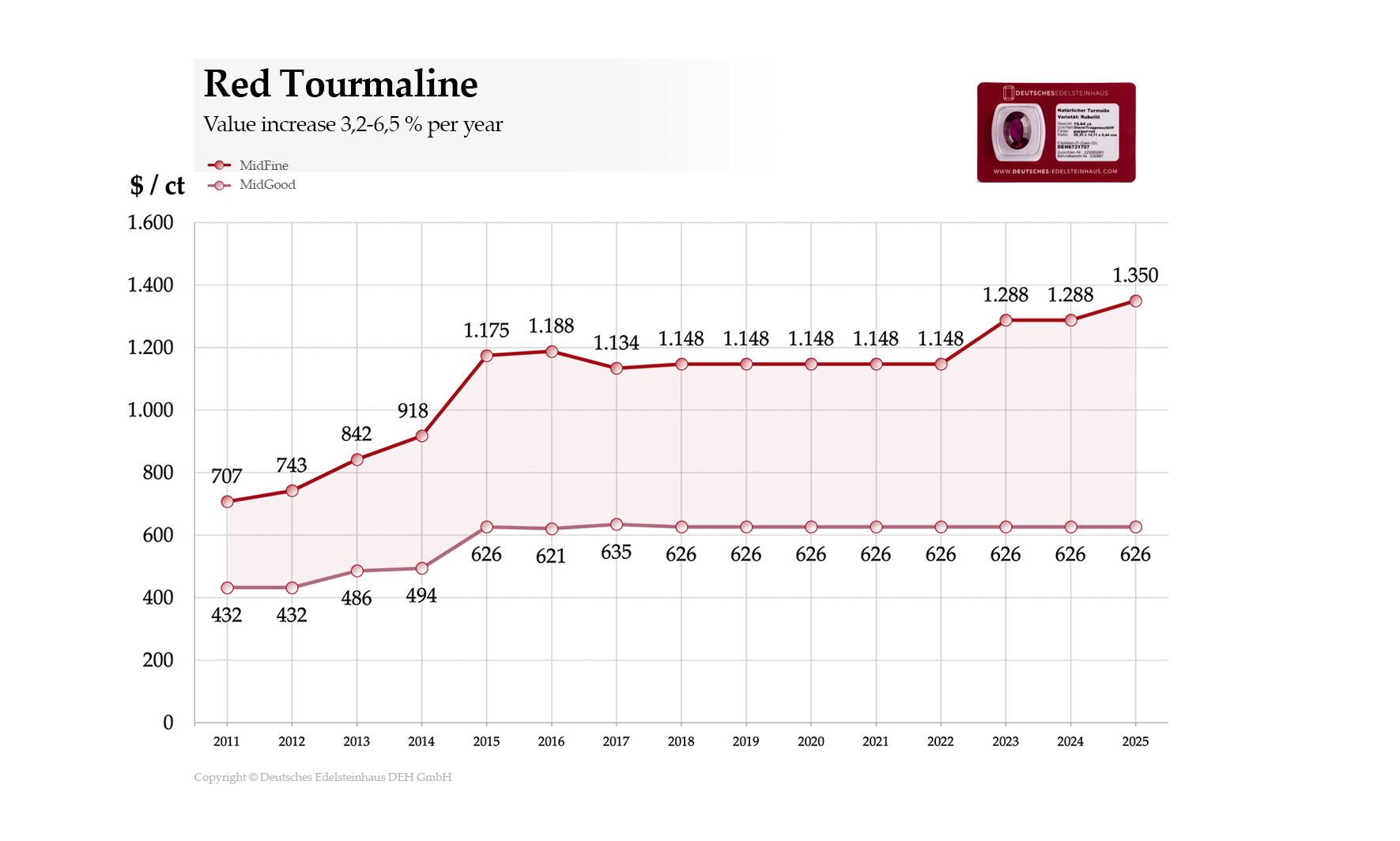
Market position: International demand for high-quality, untreated tourmalines with clearly documented origin is steadily increasing. Supply remains limited in the premium segment, particularly for evenly colored rubellites in larger sizes.
Geological characteristics: Tourmalines have a complex boron-silicate structure, enabling an exceptional variety of colors. Trace elements such as iron, manganese, lithium, or copper influence the resulting color.
Red tourmaline (rubellite) derives its intense color primarily from manganese. Typical features include growth structures and natural inclusions that can provide mineralogical clues about formation and, in some cases, origin.
The combination of geochemical complexity, selective availability, and growing market acceptance increasingly positions high-quality rubellites in the high-end collector and investment segment.

The perceived red color can change with viewing angle (pleochroism)

Investment quality: high for rare, evenly saturated colors

Market position: Stable long-term demand